At the Bureau of International Recycling (BIR) Non-Ferrous Metals Division meeting in Gothenburg, Sweden in June 2026, one of the constant messages delivered by the global recycling industry over its long history has been the need for free and fair trade. And against a backdrop of increased protectionist activity, this same sentiment was hammered home once again by industry experts addressing the latest meeting of BIR’s International Trade Council (ITC).
The USA produces a surplus of recycled materials across all the commodities and so having global market access is “critical”, insisted Robin Wiener, President of the Recycled Materials Association (ReMA) in the USA. ITC Chairman Emmanuel Katrakis, Director of Public and Regulatory Affairs at Galloo in France/Belgium, reinforced the same point: “There will always be – or very often be – a mismatch between what we are going to recycle and what our neighbour needs, and thus, to bridge that gap, we need to have access to local and global markets.”
Director General of European Aluminium Paul Voss kicked off a trio of guest presentations by pointing to data suggesting exports of aluminium scrap out of Europe have “doubled since 2015 and grown about 50% since 2020”. He told delegates: “It’s a really, really big deal.”
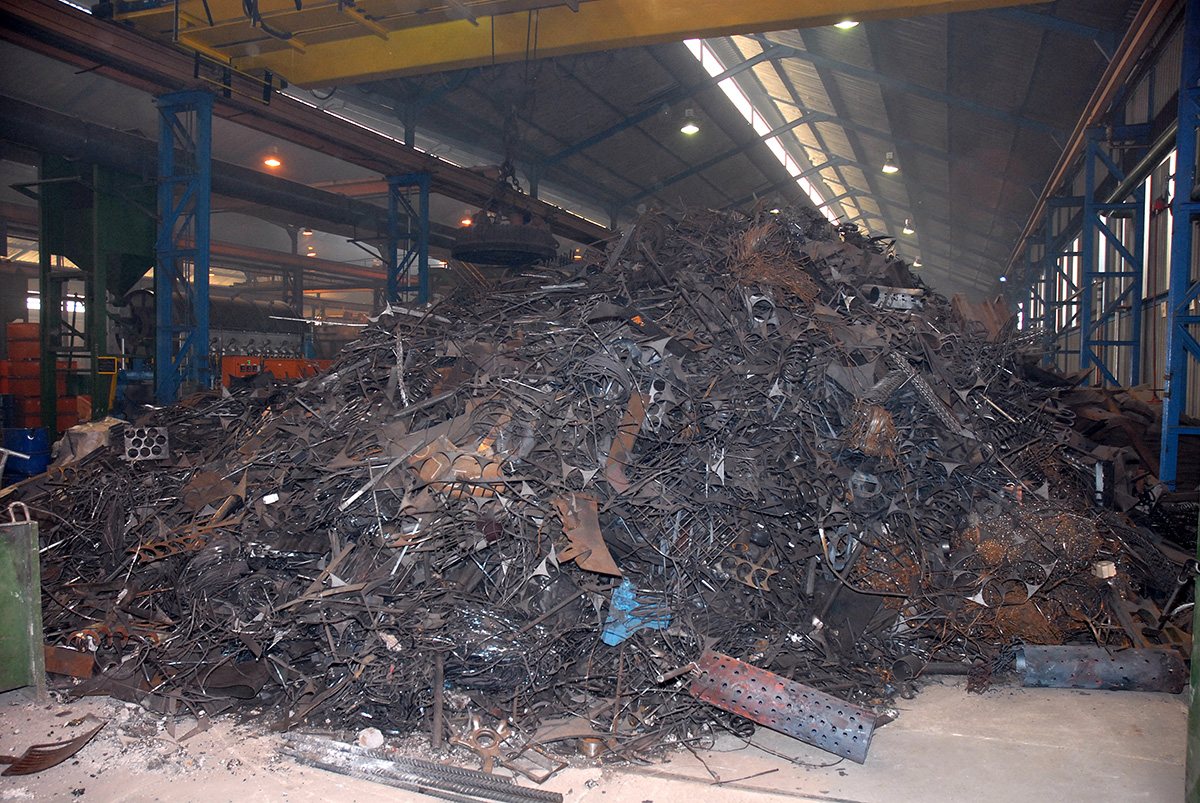
While other jurisdictions around the world are restricting exports of their own scrap, there is a feeling and a frustration within the European aluminium industry that the EU “takes a laissez-faire approach”, he said.
In November 2025, the European Commission finally confirmed that the EU would act on this in a way that reflects the interests of the entire value chain – an approach for which Mr Voss expressed unequivocal support. “It needs to be proportionate, needs to make sense,” he insisted. “I’ve read many times in the press that we were asking for a ban on the export of aluminium scrap from Europe. It’s fundamentally untrue. I think it would be excessive and heavy-handed and unhelpful. What we’re asking for is a targeted measure.”
He underlined his insistence on the need for a review clause “so that we can see how the mechanism functions in practice, what its impacts are”. And Aluminium Europe will remain open to dialogue, he added, “in the hope that we can come up with a model that works well for everybody”.
Jessica Fung, Head of Consulting at Project Blue in the UK, provided a market intelligence perspective on aluminium flows. Her contention was that “the products that are being exported by the EU are products that the EU doesn’t seem to have enough capacity to process”. From the automotive sector in particular, aluminium alloys are coming back that were used 15 or 20 years ago but are no longer being used in the automotive industry in Europe. “And so those are the products that are getting exported because they are being used by industry in other countries that can use those alloys and that metal,” she said.
According to Ms Fung, restricting exports of secondary materials would be detrimental to the recycling industry because holding costs for yards would increase and domestic scrap prices would fall. Also, more material would potentially end up in landfill.
Thierry Cochet, President of FEDEREC’s Non-Ferrous Metals Division and Commercial Director at Derichebourg Environnement in France, insisted that “introducing restrictions on exports will be based on a false analysis and will seriously damage the European recycling sector”. In 2025, he pointed out, Europe recycled 6 to 6.2 million tonnes but only around 20% was exported, mainly mixed aluminium from car shredding. It is easier for Europe’s recyclers to sell locally for a range of reasons but the market reality, he said, is that European demand is not large enough to absorb all the end-of-life product generated in the EU.
In addition to creating storage issues for recyclers, export restrictions or a ban could lead to the postponement or cancellation of investments and a significant volume of recycled material remaining uncollected or unprocessed, he argued. As an alternative, Mr Cochet urged the European Commission to work with the recycling sector to identify solutions to strengthen Europe’s industrial base.
Mr Bayram insisted that any ban or trade interference would “take money out of the pocket of recyclers”. And Alejandro Jaramillo, Founding Partner of Glorem in Mexico, underlined the investment risk in recycling any commodity before adding: “It’s very relevant that that we’re part of the discussion and that our industry is protected as well.”
Recycling Europe’s President Olivier François ventured to suggest that the latest review of the EU’s Emissions Trading System could provide an opportunity for recyclers and consumers to work together to ensure it compensates “for any loss in the price or the value of what we prepare” so as to ensure continued investment in recycling and increased use of recycled aluminium within Europe. “Maybe this is a win-win way to do something together,” he suggested. Mr Voss replied: “Of course, we can talk about this.”
Mr Katrakis summarised the meeting by saying that many recyclers believe a ban or restrictions on aluminium scrap exports “will be a medicine that won’t cure the disease”. However, he agreed with the general view expressed in Gothenburg that lines of communication must be kept open. “We appreciate the debate,” he said, “and that’s absolutely essential because, as we keep saying, if we fail, you fail.”
