In a foundry, metal castings are typically created by melting metal and pouring it into moulds, where they are allowed to harden into shape. However, once the metal has cooled, it usually requires additional work to remove imperfections. These might include rough edges, extra material, or uneven surfaces. To address these issues, workers rely on specialised tools for grinding, smoothing, and cleaning of the parts. Small grinding tools play a crucial role in this process.
Despite their compact size, these tools are highly effective, especially when it comes to working in tight spaces or handling detailed tasks that larger machines cannot perform. Hand-held small grinding tools use rotating abrasive attachments to remove unwanted material from metal surfaces, making them essential for fine-tuning the final product.
There are several types of small grinding tools commonly used in foundries. Die grinders are perfect for detailed grinding in tight, hard-to-reach areas, and lightweight rotary tools are ideal for lighter grinding and polishing work, where pencil grinders are particularly useful for precise tasks.
The versatility of these tools is one of the reasons they are indispensable in the foundry. They are powered by electricity, or compressed air, and can be fitted with different attachments depending on the task. This flexibility allows them to be used for various grinding, smoothing, polishing, and deburring tasks. After casting, metal parts often have burrs or flash that need to be removed – where burrs are thin edges or extra material that form when the metal cools in the mould, while flash refers to excess metal that leaks out. These imperfections can affect both the fit and appearance of the final product, which is why workers rely on small grinding tools equipped with appropriate abrasives to remove them without damaging the part.
Weld seams, which are often left from joining metal parts, may also require attention. These seams can protrude and affect the final part’s appearance and strength. Small grinders are used to smooth out the weld lines, ensuring they blend seamlessly with the surrounding metal. This not only improves the part’s aesthetics but also enhances its structural integrity.
Small grinding tools are also valuable for maintaining moulds and tools used in the casting process. Over time, moulds and tools can wear out or become damaged, but instead of replacing them, foundry workers can use pencil grinders to reshape or touch up these items, saving both time and money while maintaining smooth, efficient production.
In South Africa, Grinding Techniques is a leading supplier and manufacturer of industrial abrasives tailored to the metalworking and foundry sectors. Their range of products is designed to work seamlessly with small grinding tools, offering solutions that improve both performance and efficiency.
Their range of mounted points are available in various shapes perfect for tasks like deburring, polishing, and finishing intricate areas of cast metal, with Tungsten carbide burrs also a key product. Known for their toughness and durability, these burrs are ideal for aggressive material removal, particularly in hard metals like chrome and manganese castings. They come in various shapes, such as cylindrical, ball, flame, and cone, making them highly versatile for a wide range of tasks, from deburring to shaping, or grinding out cavities before welding.

Spiral bands, another critical product in the foundry process are more used in the pattern shop. These spiral bands, which are in essence abrasive sleeves, fit onto a mandrel and are often used for finer grinding tasks.
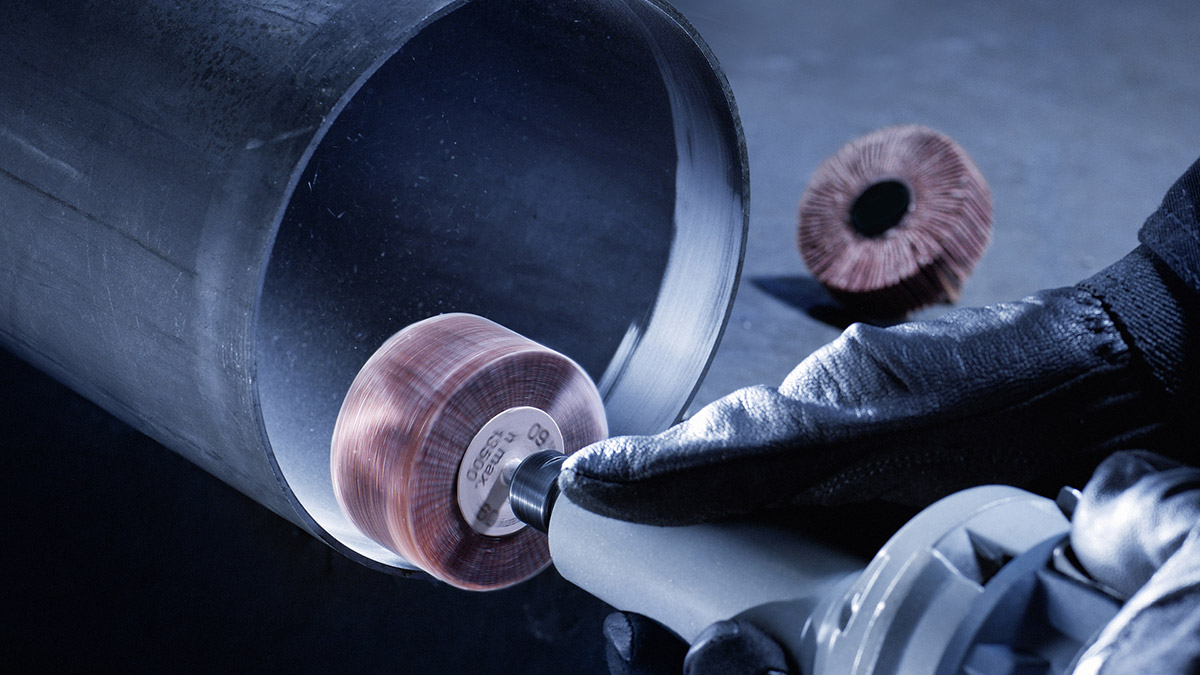
Spindle mounted flap wheels, also part of the pattern shop range, is particularly useful for blending and finishing tasks. These wheels, consisting of layers of abrasive material, are mounted on a spindle and are commonly used with pencil grinders. They are ideal for refining surfaces, deburring, and smoothing, especially in tight spaces and on curved surfaces. For foundries that require precise finishing, spindle mounted flap wheels offer an excellent solution for pattern making and casting preparation.
While small grinding tools are vital to the finishing process, safety is of utmost importance. Proper safety precautions must be followed at all times, including wearing protective gear such as safety glasses, gloves, and hearing protection. Additionally, tools should always be checked for damage or wear before use to ensure safe operation.
For further information contact Grinding Techniques on TEL: 011 271 6400 or email info@grindtech.com or visit www.grindtech.com

