South African importers face immediate higher duties on a wide range of steel and downstream metal products, while uncertainty remains over rebate permits for shipments already on the water.
The International Trade Administration Commission (ITAC) has finalised its review of South Africa’s steel import duty structure, with SARS publishing the implementation gazette on May 15. The changes introduce higher tariffs on several steel categories, alongside rebates for certain products that the local industry cannot manufacture and supply.
However, to qualify for the rebate, importers will have to apply to ITAC for permits, and with guidelines not yet published, there is uncertainty regarding shipments that are already in transit.
The duties announced will apply to products such as flat-rolled iron or non-alloy steel, as well as bars, rods, tubes and pipes. Previously, South Africa applied tariffs of zero to up to 15% on these products.
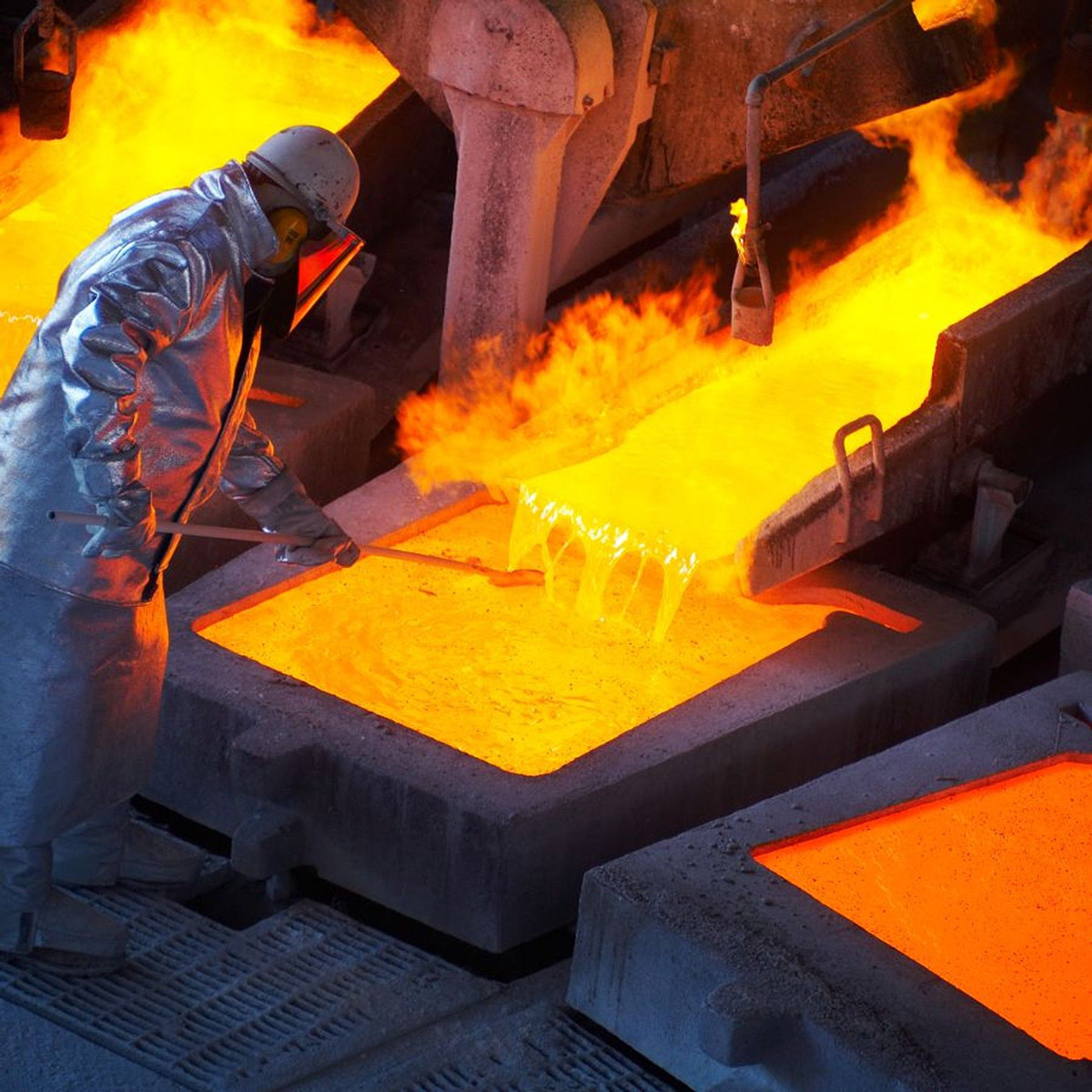
The newly implemented import duties cover the following categories:
10% Duty: Flat-rolled, electrical, and alloy steel products, as well as bars, rods, sections, and angles.
15% Duty: Welded and seamless tubes and pipes, fittings, tanks, drums, wire ropes, fencing, chains, screws, and staples.
20% Duty: Hand tools, saws, wrenches, hammers, pliers, screwdrivers, interchangeable tooling, and household knives.
30% Duty: Select fittings, washers, and steel baths.
Anti-dumping Duties (up to ~75%): Specific U-sections, I-sections, and H-sections of iron or non-alloy steel imported from China and Thailand.
“We are hoping that this decision will provide the local industry necessary space to adjust in a manner that allows them to invest in their capability,” said ITAC Chief Commissioner Ayabonga Cawe in a Business Report interview.
The tariff adjustments would not affect preferential treatment for certain geographies, he added.
Steel consumption
Imports make up about 36% of South Africa’s total steel consumption, with China accounting for 73% of imports, according to the South African Iron and Steel Institute (SAISI).
South Africa also imposed steep import duties on structural steel imports from China and Thailand in March after finding evidence of dumping.
SAISI says South Africa’s imports of downstream steel products increased by 5% year-on-year during Q1 2026, rising to 167 453 tons, while average import prices declined by 9.1%. Significant growth was recorded in structural steel, wire products, fabricated articles, fasteners, and infrastructure-related products, highlighting rising import penetration across value-added manufacturing segments. The latest SARS data reinforces growing concerns regarding the displacement of domestic manufacturing capacity and the increasing leakage of infrastructure-driven demand toward imported steel products rather than local industry.
ITAC found that South Africa’s steel sector is facing serious challenges caused by global overcapacity in steel production, cheap imports, especially from China and India, trade diversion as countries impose higher tariffs, weak domestic demand, high energy and logistics costs, customs fraud, under-invoicing and tariff circumvention.
With that in mind, 20% duties were imposed on products such as spades, shovels, timber wedges, hand saws, knives and cutting blades, rods and tubes, which were previously free of tariffs. Similarly, screws, bolts, nuts, coach screws, screw hooks, rivets, pins and washers will now attract 30% duties.
“We are seeing massive price injury in the form of cheap steel products landing in South Africa below even a comparable cost of production,” said Cawe.
According to ITAC’s report, the current global conditions warranted consideration of emergency safeguard measures under the General Agreement on Tariffs and Trade (GATT). The Commission also raised concerns over geopolitical instability and the growing use of trade restrictions globally.
Cawe said the crisis was not limited to South Africa, with countries across the world facing the consequences of massive global steel production capacity that far exceeds demand.
Cawe noted that countries such as China, India and Turkey had dramatically expanded steel production over the past two decades, while major economies such as the European Union (EU) had responded by introducing tougher trade barriers.
“The EU has had rolling safeguard measures, which they are now transitioning to a 50% duty. South Africa’s steel industry had experienced a dramatic collapse in production and employment over the past two decades. In 2005 we produced 9.7 million tons of steel in South Africa. We produce at this point probably around half or less than half of that number,” he said.
Cawe also pointed to severe job losses within the sector as a result of the influx of cheap steel into the country. “At the end of 2009, over 50 000 people worked in the basic iron and steel sector. You now have at the end of 2025 less than half of that number.”
The ITAC report noted that more than 150 submissions were received from industry stakeholders during the review process, including requests for higher duties and new rebate provisions.
Though several companies had asked for steep tariff hikes, including increases of up to 65.55%, the Commission recommended that the rate of customs duties on products be increased to their respective World Trade Organisation bound rates, in order to address import surges, price undercutting and duty circumvention affecting the domestic steel industry.
A notice sent out by XA Global Trade Advisors notes that duty rebates on specific steel products are available where those products are not made locally. These include semi-finished billets, aluminium-zinc coated coil, H-sections, wire rod, rails, as well as seamless and galvanised tubes.
The devil, however, is in the detail: Some of these rebates are only available to defined end uses such as hot plate stoves, domestic fridges and freezers, steel garage doors, as well as port and water infrastructure.
Anyone applying for rebates will have to apply to ITAC, creating bureaucratic delays that many businesses dread.
Import growth concentrated in strategic downstream categories
According to SAISI several downstream product categories recorded significant import growth during Q1 2026.
Among the strongest increases were:
Wire rope and cable imports, which increased by approximately 49.4% year-on-year to 12 251 tons;
Structures, towers, scaffolding and bridge components, which rose by approximately 58.8% to 20 625 tons;
Articles of wire, forged products and miscellaneous steel articles, which surged by approximately 66.2% to 19,832 tons;
Springs imports, which increased by approximately 82.6% year-on-year; and
Nails, tacks and staples imports, which nearly doubled from 2 298 tons to 4 526 tons.
These categories are particularly significant because they sit deeper within the manufacturing value chain and support a broad network of domestic fabrication, engineering, construction, mining and infrastructure-related industries, continued SAISI.
The continued growth of imported fabricated products therefore raises concerns not only for primary steel producers, but also for downstream manufacturing ecosystems that rely on stable domestic steel supply chains said SAISI.
However, we all know about AMSA and its closing of mills and getting support from ITAC and the dtic with duties being imposed. The closing of the AMSA plants in Saldanha Bay and Newcastle have forced companies to look elsewhere for supply, especially when you hear comments like: “Purchasing hot-rolled steel from AMSA’s Vanderbijlpark plant is more expensive than importing it and paying the duties,” and, “I can import the casting machined and finished at less than the cost of a casting made locally.”
And it was not so long ago that we saw the demise of Evraz Highveld Steel.
We also read about how South Africa sits atop an estimated 80% of the world’s economically viable chrome ore reserves, the foundational raw material for stainless steel production worldwide, and yet South Africa has lost its ferrochrome dominance. The scale of the market share erosion that has taken place over the past 25 years is difficult to overstate. In 2001, South Africa accounted for roughly 51% of global ferrochrome output. Today, that figure has contracted to approximately 10%. Over the same period, China’s share expanded from around 5% to 65% of global production, despite China possessing negligible domestic chrome ore reserves of its own.
Ferrochrome represents a crucial value-added product in the global mining sector, multiplying the value of raw chrome ore approximately five times through sophisticated processing techniques. This strategic alloy, primarily composed of chromium and iron, serves as the essential ingredient that gives stainless steel its signature corrosion resistance and durability properties that make it indispensable across numerous industries.
You have to ask what impact this has on Columbus Stainless, founded in 1966, South Africa’s and Africa’s only producer of stainless steel flat products.
The new tariffs will clearly benefit some in the steel value chain and prejudice others. Either way, the tariffs impact disallows free and fair competition to downstream users.
But to impose tariffs on products that are not made locally does not make sense. Equally, to impose tariffs on metalworking tools such as cutting and removal tools, forming and shaping tools, joining tools and many others – the majority of which are not made locally and are essential tools in producing, manufacturing and machining steel into the desired components – is pointing towards exploiting the local industry.
Besides the automotive industry, key technologies rely on this tooling. Many, many industries rely on this tooling. Does ITAC and the dtic not realise that raw material prices to make this tooling are rising rapidly and have to be passed on because the OEMs can only absorb a certain amount. And now they impose an extra 20% tariff!
