According to a report in AL Circle Africa’s aluminium sector entered 2026 facing a difficult question: How exposed has the continent’s supply chain become to power disruptions and concentrated production risks? The concern intensified after regional aluminium production declined to 381 000 tons in Q1 2026, marking a 6.2 per cent drop from 406 000 tons in Q4 2025 and a 3.3 per cent Y-o-Y decline compared with 394 000 tons in Q1 2025. The decline exposed how dependent Africa’s aluminium chain remains on concentrated production hubs, fragile electricity systems and climate-sensitive infrastructure.
Africa’s aluminium output looked stable through 2025 – so what changed?
For much of 2025, Africa’s aluminium production remained relatively balanced. Output increased from 394 000 tons in Q1 2025 to 407 000 tons in Q2, reflecting quarterly growth of around 3.3 per cent. Production then edged slightly higher to 408 000 tons in Q3 before easing marginally by nearly 0.5 per cent to 406 000 tons in Q4 2025.
Behind that stability, however, production remained heavily concentrated in a few parts of Africa. South Africa and Mozambique continued to account for most of Africa’s aluminium output, making the region increasingly vulnerable whenever disruptions emerged in either market.
South Africa maintained relatively stable production during 2025, supported by mature smelting operations and established export networks, with aluminium output increasing from 716 000 tons in 2024 to 722 000 tonnes in 2025, retaining its position as Africa’s leading producer. Mozambique, however, remained more exposed to operational disruptions and electricity shortages, with production volatility becoming increasingly visible after 2022 despite signs of partial recovery, although output still rose slightly from 511 000 tons in 2024 to 522 000 tons in 2025.
Elsewhere, Egypt maintained relatively steady output, while Cameroon and Ghana remained smaller contributors with limited growth momentum. Cameroon’s aluminium production is estimated to decline from 60 000 tons in 2024 to 50 000 tons in 2025. Egypt is expected to record a modest recovery from 288 000 tons in 2024 to 295 000 tons in 2025, while Ghana’s output is projected to remain unchanged at 29 000 tons in both years. A broader assessment of these shifting production trends and their impact on the global market is explored in “Global Aluminium Industry Outlook 2026.”
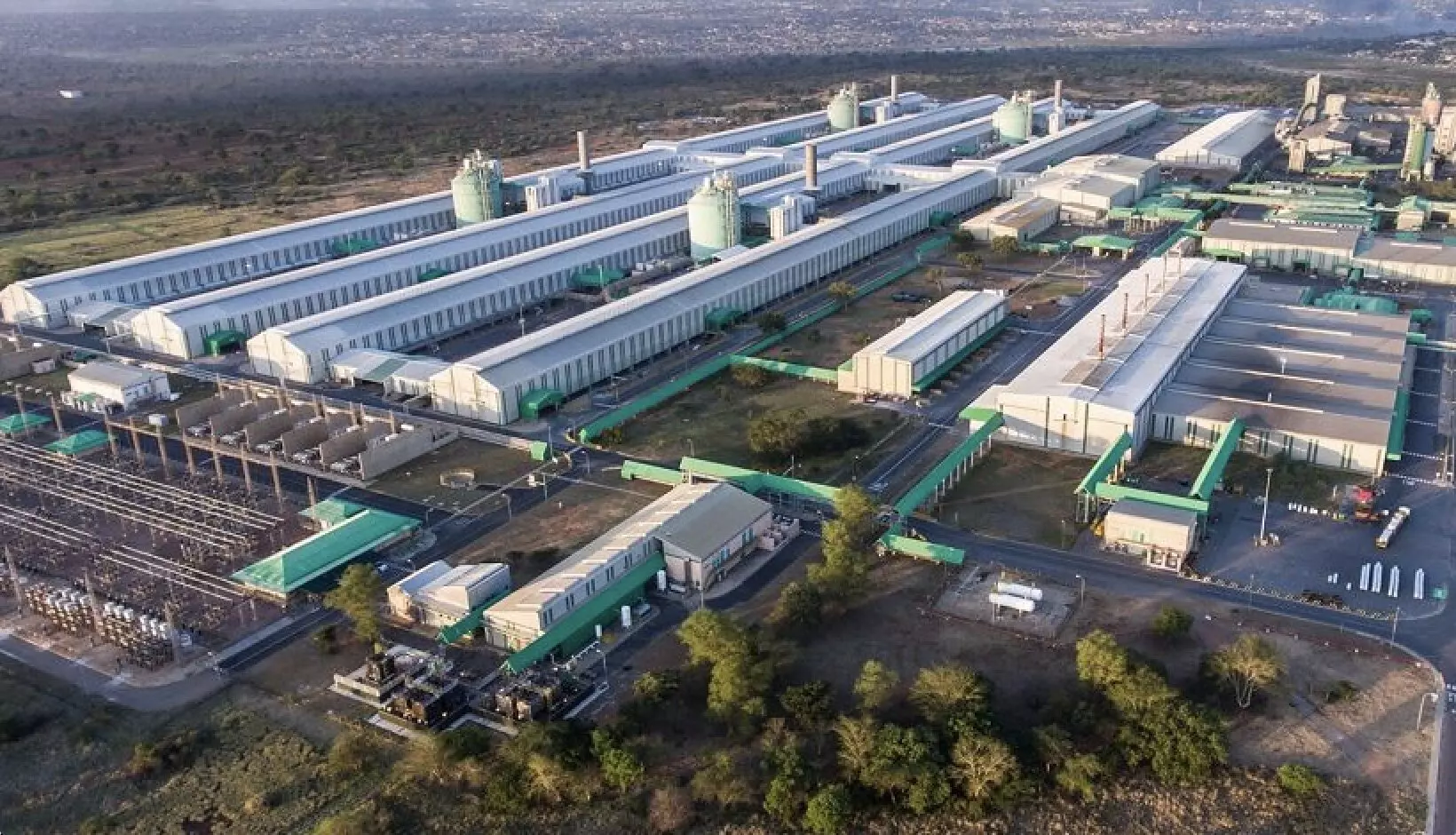
Then Mozal went offline and the market changed quickly. The turning point came with the shutdown of Mozal, Africa’s largest electrolytic aluminium smelter located near Maputo in Mozambique. The facility officially ceased production on 15 March 2026, after negotiations over electricity pricing and long-term supply between South32, the Mozambican government and Hidroeléctrica de Cahora Bassa (HCB) failed.
South32, which owns a 63.7 per cent stake in the 580 000-tons-per-year Mozal operation, said it could not secure confidence in obtaining adequate and affordable electricity beyond March 2026. The company subsequently placed the smelter on care and maintenance, ending 25 years of aluminium production at the site.
The closure did not just remove a major producer from the market – it exposed how fragile the underlying power system had become.
Mozal’s electricity network had been vulnerable for years
Mozal’s operations depended on an unusually complex electricity arrangement. Power generated at the Cahora Bassa hydropower facility in northern Mozambique is first exported through South Africa’s Eskom network before being routed back into Mozambique through a transmission loop stretching nearly 1 400 kilometres.
The system was originally designed in the 1970s to prioritise electricity exports, and decades later there is still no direct transmission connection linking the Cahora Bassa dam to southern Mozambique, where the smelter operates.
That dependency mattered because Mozal requires roughly 950 megawatts of uninterrupted electricity to operate its two production lines, which together produce around 580 000 tons of aluminium annually.
The smelter itself was developed in phases. Phase 1, commissioned in 2000, used Aluminium Pechiney AP30S technology and had annual capacity of 253 000 tons. A second potline added in 2003 lifted total capacity to 506 000 tons before later operational improvements pushed output closer to 580 000 tons per year.
Climate disruption pushed the regional power system deeper into crisis
Mozambique’s electricity crisis worsened further because of severe climate disruption across Southern Africa. The 2023–24 rainy season became one of the driest on record due to a strong El Niño event, sharply reducing rainfall across the Zambezi Basin that feeds the Cahora Bassa reservoir. Several regions received less than 20 per cent of normal precipitation levels.
Extreme heat, with temperatures running 1–2°C above average, accelerated evaporation and reduced water availability further. By mid-2024, the Cahora Bassa reservoir had fallen to around 44 per cent of capacity, well below the level required to maintain stable hydropower generation.
The impact of the power crisis and Mozal’s shutdown became increasingly visible across Africa’s aluminium market by February 2026. Regional production, which stood at around 134 000 tonnes in January, dropped sharply by nearly 12.7 per cent to around 117 000 tons in February as supply pressure intensified across the region.
Production later recovered partially by about 11.1 per cent to nearly 130 000 tons in March, but the disruption showed how quickly Africa’s aluminium supply balance could weaken once a major producer went offline.
Although February has historically remained a softer production month for the region, the decline in 2026 was notably steeper. Output during February 2026 was also down around 4.9 per cent Y-o-Y compared with nearly 123 000 tons produced in February 2025, suggesting that the weakness was becoming increasingly structural rather than seasonal.
Imports rise as buyers race to secure aluminium supply
As regional production weakened, aluminium buyers increasingly turned to imports to stabilise supply chains and maintain aluminium availability. Following the sharp February production decline, aluminium imports during the first two months of 2026 increased to 30 913 tons from 22 924 tons during the same period in 2025 with South Africa emerging as a major supplier.
The disruption at Mozal showed that even a single smelter shutdown can quickly reshape Africa’s aluminium trade flows, production balance and regional supply stability.
