To say foundry work has existed for millennia is no exaggeration. As of now, the earliest known metal casting dates to a Mesopotamian copperworks circa 4000 B.C. And though methods and technology have obviously changed since the first Neolithic metalworkers, the core process remains essentially the same – pouring molten metal into moulds and then removing and cleaning the casting into its final shape. It’s the end process, known as degating, where the latest technical revolution is occurring. Plasma cutting technology is now making degating faster, more precise and, most importantly, safer.
From Moscow’s “Cannon Shop” of the mid-15th century through the Cupola furnace commercial development in the 18th century and to today’s electric arc furnace devouring 400 – 500 kilowatt-hours of electricity per ton of steel production, founding has been an integral and significant part of the global economy. A $191 billion market in 2024, foundry growth is projected to jump to roughly $202 billion in 2025 and up to $238 billion by 2029. Founding is a primary process in making almost everything we touch – some 90% of durable goods globally.
Foundries vary in size and industry focus. Larger companies are likely to work in automotive, aerospace, energy, heavy machinery, white goods and other industries that require structural components. Medium to large companies tend to work on non-structural components. In the automotive industry, for instance, mid-size foundries produce drivetrains or transmission housings. Finally, small companies produce multiple SKUs in a high-mix, low-volume shop and work in any variety of industry sectors.
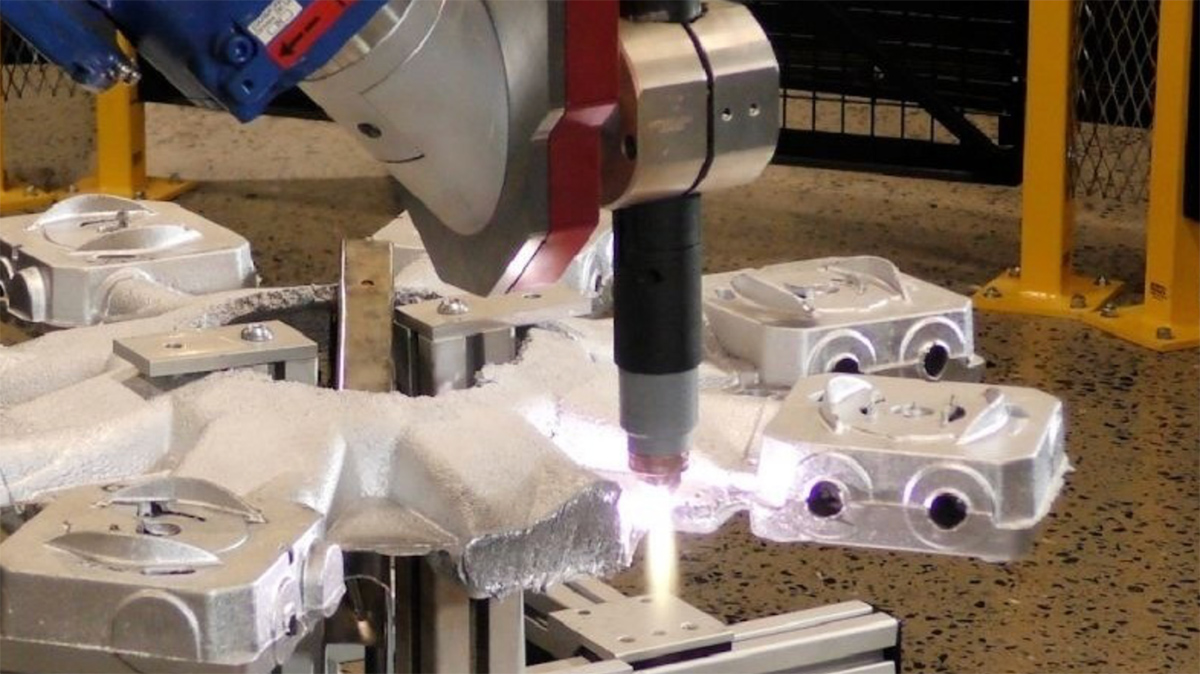
Regardless of the foundry’s size and specialty, metal castings are made by melting the metal and pouring it into a mould. Once the casting has cooled and solidified, the mould is removed and a variety of secondary processes including degating or removing the runners, sprues and gates – the excess material from the cast – bring the casting to final form and dimensions.
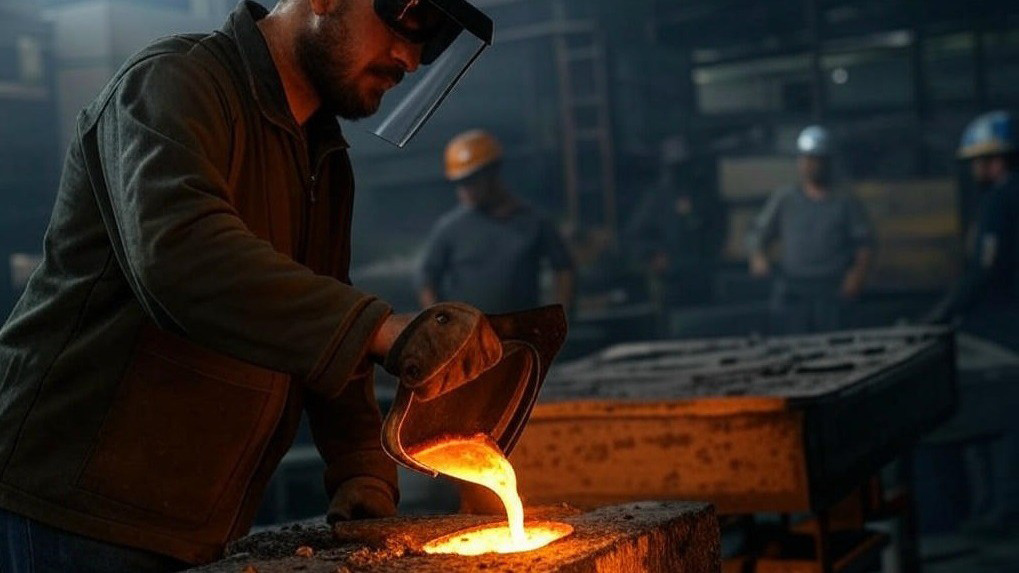
Foundry work historically and currently is difficult, arduous work. The environment is challenging with high temperatures, molten metal, large equipment and volatile metal dust. Degating has been among the most dangerous jobs in the foundry. Workers typically use hammers, grinders, and saws to manually degate castings, which puts them at significant risk of impact, burn, cut and crush injuries. Ergonomically, the work is rugged and hard – hard on equipment and tooling and even harder on people.
Recently, many large foundries have moved to high-pressure die casting (HPDC) that uses enormous aluminium die casting machines to produce large components or entire body-in-white castings. These HPDC castings reduce weight and eliminate the need for secondary welds and other processes. However, as with any metal casting, degating and excess material removal must occur to finish the component.
To degate HPDC castings, manufacturers use extremely large trim presses. These large machines require a tremendous capital investment, cannot be scaled and are difficult to retool when production changes. Retooling a trim press can take months. Trim presses are also prone to jamming. As a result, foundries can experience a significant amount of downtime and production loss when using a trim press to degate a large HPDC casting.
Plasma cutting technology is evolving as an efficient and much safer alternative to traditional degating methods for both large and small components in the foundry setting. Hypertherm has been innovating and evolving plasma cutting for more than 50 years with technology advances that take metal cutting and trimming to new levels.
Plasma cutting is a versatile process that uses a compressed jet of ionized gas or plasma to cut through metals. The plasma stream is usually formed by forcing a gas such as nitrogen, oxygen, argon or air through a narrow nozzle. The gas stream is then ionized with the use of an external power supply, creating a plasma arc that cuts the workpiece by first melting it and then blowing it away.
Plasma is also extremely versatile and can work with most all electrically conductive metals, including ferrous metals such as carbon steel, cast iron and stainless steel. It can also cut non-ferrous metals such as aluminium, brass and copper. Plasma cutting is typically used for metals up to two inches thick, although it can cut depths up to six inches. Another feature of the technology is that it causes little to no metal deformation. Because they cut fast with little slag or dross – the resolidified molten metal that isn’t fully ejected from the cut – plasma torches produce more accurate cuts with a smaller kerf than oxyfuel torches. Additionally, plasma cutting does not require the material to be preheated as it does with oxyfuel cutting. This makes plasma cutting faster and more efficient.
Hypertherm has developed a number of plasma cutting solutions that are highly beneficial to degating in the foundry setting. The Powermax45Ò SYNCÒ, Powermax65Ò SYNCÒ, Powermax85Ò SYNCÒ and Powermax105Ò SYNCÒ plasma cutting systems are safer than traditional foundry degating processes and significantly lessen the risk of injury for people working in foundries. Instead of using hammers, saws and grinders to physically remove casting gates, runners and risers, operators can use plasma cutting’s no-touch solution that does not carry with it the risk of significant injury. Plasma cutting is also less physically demanding and eliminates the harsh physical nature of traditional foundry work.
Plasma cutting allows operators to trim tight, hard-to reach spaces more efficiently than with saws, hammers and grinders and eliminates the cool-down period needed for traditional degating methods. Instead of waiting for the casting to cool before it can be cut, plasma cutting solutions can degate immediately, allowing material to be returned to the oven, which decreases overall cycle times.
Hypertherm has also developed revolutionary technologies that improve plasma cutting’s efficiency and ease of use. Our single-piece PowermaxÒ SYNCÒ cartridge technology is a self-contained unit that includes each of the elements found in a traditional plasma cutting stack. It adjusts amperage and process settings and simplifies consumable changeouts, which helps reduce reliance on skilled operators.
Foundries have also discovered how easy it is to integrate PowermaxÒ cutting technology with automation, particularly cobot and fully robotic degating systems. The Powermax105Ò SYNCÒ plasma cutter, robotic torches, and consumable cartridges easily integrate with a variety of robots to form single or multiple robot trimming cells for castings. Automated, robotic platforms give larger foundries a reliable, precise alternative to trim presses and manual degating methods. For small to medium foundries, robotic plasma cutting is an ideal fit because it requires little to no special programming skills and is ideally suited to high-mix, low-volume operations.
Robotic plasma degating also presents substantial economic benefits. It avoids the need for large capital expenditures and is extremely flexible and easy to deploy. Should moulding and production changes occur, foundries do not face lengthy downtime associated with retooling a trim press. Further, robotic plasma degating cells consume a far smaller footprint than trim presses and can be easily scaled to meet changing demands. Robotic plasma also allows foundries to trim castings to near net shape, which pares down secondary operations, improving efficiency and tool life.
In addition to being a force multiplier, robotic plasma cast trimming solutions mitigate against the ongoing workforce challenges by helping attract and retain new workers. To start, increased safety on the foundry floor makes the work more appealing to a broad talent pool. At the same time, new and veteran operators alike can improve their overall job satisfaction when given the opportunity to diversify and enhance their skill sets with new solutions and applications.
Though the ways and means of founding have changed and evolved dramatically, the industry’s challenges remain very much the same as those faced by early foundries. Manufacturing productively and efficiently to remain profitable while creating a safe environment for skilled workers will always drive foundries to find better ways of doing things.
Degating with Hypertherm plasma cutting technology is this millennium’s solution to making foundries safer, more efficient and more productive.
